
History of
Novi Sad
The wider area of Novi Sad has been inhabited for millennia, with traces of settlements from the Middle Paleolithic and Neolithic periods, through the Copper and Bronze Ages, and into the Iron Age.

-
10th year after Christ
The territory of today’s Srem is within the Roman Empire. The Romans built the fortress Cusum on the Petrovaradin rock.
-
13th century
A Cistercian monastery was built. During the reign of the Hungarian king Bela IV, a fortified Cistercian monastery was built in the area where a contemporary Petrovaradin Fortress is located. Its church was dedicated to the Beatificial Virgin Mary.
-
16th century
Petrovaradin was conquered by the Ottoman Turks. The fortress with the settlement that surrounds it becomes the centre of the Srem Sanjak nahia (nāḥiyah).
-
1683 – 1699.
The Great Viennese War or the War of the Holy League. The war between the Ottoman Empire and several European powers began with the Second Siege of Vienna, and ended with the defeat of the Ottoman Turks in several battles. One of them – the Battle of Slankamen (1691) is connected with the Fruška Gora area.
-
1699.
Karlovci Peace Treaty. The peace treaty was signed between the Austrian Empire and its allies on the one hand, and the Ottoman Empire on the other, with the mediation of the Netherlands and England. According to the provisions of the peace treaty, the border in Srem was placed to the south of Petrovaradin. At the site where the negotiations took place, a building with four opposite doors was originally erected so that all delegations would have equal status and importance. The place was marked with a chapel in 1710. The Chapel of Our Lady of Peace got its modern look at the beginning of the 19th century. It was renovated several times during the 19th, 20th and 21st century.
-
1716.
The battle of Petrovaradin. The battle between the Austrian and Turkish armies ended with the victory of the Austrians. The victorious army was commanded by Eugene of Savoy. The monument dedicated to the victory of the Christian army, which included Serb border guards, was built in 1902 on a hill called Vezirac, because it was believed that the tent of the Turkish commander, the defeated Damad Ali Pasha, was put up there.
-
February 1st, 1748.
Elibertation. The rich inhabitants of the Petrovaradin Trench bought the status of a free royal city for the sum of 80,000 Rhine forints in silver from the Austrian Empress and Hungarian Queen Maria Theresa. The proclamation of the Petrovaradin Trench as an independent entity with privileges that would initiate the economic and cultural development of the town meant a change in the name of the town to Neoplanta – Neusatz, Újvidék, and the Serbs, making the majority at that time, translated it as – Novi Sad.
-
1848 -1849.
The Rebellion. During the revolutionary 1848/1849, when the Serbian community, having declared the Serbian Vojvodina, sided with Austria, Novi Sad was bombed from the Petrovaradin Fortress in 1849. One third of houses were destroyed then, and the population was halved.
-
1918 - 1941.
Until 1918, Novi Sad and the entire area of Vojvodina were within the Habsburg Monarchy. After the end of the World War I, Novi Sad was within the Kingdom of the Serbs, Croats and Slovenes (since 1929, the Kingdom of Yugoslavia). In 1929, the city became the seat of the Danube Banovina of the Kingdom of Yugoslavia.
-
1941-1944.
Occupation. During the World War II, the area of Bačka was occupied by Horthy’s Hungary and Srem by the puppet Independent State of Croatia.
-
January 21st to 23rd, 1942.
Novi Sad Raid. The Hungarian occupation authorities organized and carried out the massacre of the civilian population of Novi Sad. According to the data published in the “Short History of Novi Sad”, 1246 people were killed, mostly Jews and Serbs.
-
October 23rd, 1944.
The Day of liberation in the World War II. On that day, the units of the People’s Liberation Army of Yugoslavia entered Novi Sad, followed by those of the Red Army.
-
1944-1992.
As an important economic, cultural, political, and university centre Novi Sad was developing within the socialist Yugoslavia. As the capital of the Autonomous Province of Vojvodina it was the flywheel of overall development, the place where the education, work of public administration bodies, and judiciary were operating in the languages of nations and nationalities of Vojvodina, which was also followed by the media scene (newspapers, publishing, and television). This accomplishment is also currently in place.
-
1992-2006.
Novi Sad was a cultural, economic and administrative centre within the Federal Republic of Yugoslavia and in the period from 2003 to 2006 of the State Union of Serbia and Montenegro. During NATO bombardment of the Federal Republic of Yugoslavia, in spring 1999, the city and its surroundings suffered significant destruction that included three bridges across the Danube that made its recognisable appearance.
-
Since 2006
Novi Sad has been an administrative, political, and cultural centre of the Autonomous Province of Vojvodina, which is an integral part of the Republic of Serbia.
-
2019.
Novi Sad was the European Youth Capital. A large number of programmes, activities, exchange of knowledge and experiences were developed within the #OPENS2019 Project that launched the process of improving the status of young people.
-
2022.
Novi Sad is a European Capital of Culture. It is a project of joint efforts of all interested stakeholders in the field of revitalization of cultural heritage, redesigning of the city’s cultural identity through the development of intersectoral and intercultural dialogue, decentralisation of culture and inclusion of the citizens in all processes related to that.
Right Bank: The Petrovaradin Fortress
Novi Sad’s roots lie on the Petrovaradin Rock, where the iconic fortress stands today, and they reach as far back in ot the past as the Middle Paleolithic. Archaeological research has revealed tools used by Neanderthals between 60,000 and 35,000 BC in the upper layers of the Petrovaradin Fortress. The area’s earliest known inhabitants were Celtic tribes.
This places Novi Sad among the oldest archaelogical sites in Serbia. Research has reached back into prehistory, Vinča culture, the Chalkolithic period, and both the older and younger Iron Ages. Findings from the Neolithic era confirm that life existed here as early as 3000 BC.
With the arrival of the Romans in the 1st century AD, the Roman province of Pannonia included Petrovaradin, where they built the military fortification Kuzum. After the Romans came the Goths, Gepids, Lombards, Pannonian Avars, and Franks.
Slavic ancestors of today’s population settled in the area in the 6th century. Due to its strategic importance, Petrovaradin attracted numerous powers: it was ruled by the Bulgarians in the 9th century, then Byzantium, and later Hungary in the 12th century.
During Ottoman rule, a thriving settlement emerged beneath the fortress — today’s Lower Town — with around two hundred houses, religious buildings, shops, and a school. The Ottomans lost the area to the Habsburg Monarchy in the 17th century. After ruling this area until WW1, it was the Austro-Hungary whose influence shaped much of Novi Sad’s current identity. Under Empress Maria Theresa, the Petrovaradin Fortress was built, retaining the same appearance today as it had when completed in 1780.
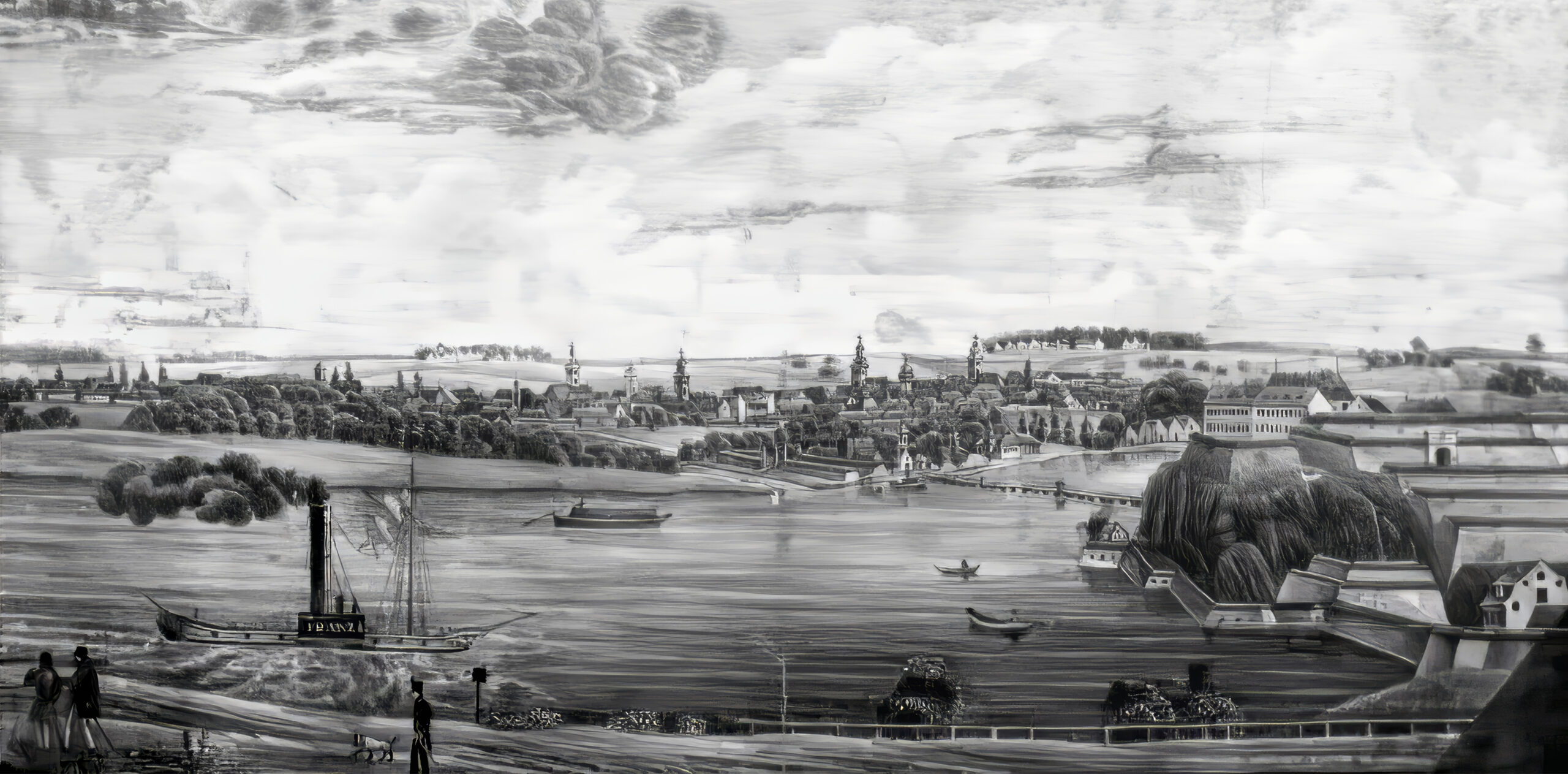
Left Bank
Life also flourished on the other side of the Danube, where most of modern Novi Sad is located. Archaeologists have found evidence of settlements from the 2nd and 3rd centuries BC. The earliest written mention of a settlement here appears in a 1237 charter of Hungarian King Béla IV, granting lands and estates on this side of the Danube to the Cistercian Abbey across the river.
Some of these early, self-sufficient facilities provided the model for salaši, the traditional farmsteads that still form part of the region’s cultural and tourist identity.
History shows that Novi Sad began to grow rapidly after the Ottomans withdrew at the end of the 17th century. When fortress construction began in 1692, the settlement consisted mainly of huts inhabited by craftsmen supporting the builders across the river. Known as Racka Varoš, Srpski Grad, or Petrovaradinski Šanac, the improvised town was home to Serbs, Hungarians, Germans, Jews, Greeks, Armenians, and Bulgarians.
In the early 18th century, the settlement became part of the Habsburg Monarchy and the Military Frontier governed from Vienna. It also became the seat of Serbian church parishes in the region known as Bačka – with the vladika (Serbian Orthodox Bishop) at its head.
After failed Ottoman attempts to reclaim the area, the Austrians hold becomes firmer and the settlement, then known as Racka Varoš, developed into a lively trading hub. The Danube marked the divide between fertile plains and the vineyards around Petrovaradin.
In 1718, the entire village of Almaš (30 km north of today’s city center) relocated to the settlement, significantly increasing the population. By this time, the settlement counted over 110 Serbian households, around 15 German, and 5 Hungarian.
As local craftsmen and merchants prospered, they collected over 82,000 forints and purchased the status of a free royal city from Empress Maria Theresa in 1748. On this occasion, the Empress issued an Edict renaming Petrovaradinski Šanac to Novi Sad.
With more than 4,500 inhabitants, Novi Sad quickly developed institutions characteristic of European cities of that time—bookshops, religious buildings, and schools. The city was governed by a magistrate consisting of a judge and twelve senators, with Serbs holding half the seats, and leadership roles alternating between ethnic communities.
Throughout the 18th century, Novi Sad grew into the political, social, and cultural center of the Serbian people, earning the nickname Serbian Athens.
In 1848, during a wave of national movements across Europe, conflict erupted between Hungarian independence forces and the Austrian Empire. During this conflict, the city was bombarded and nearly destroyed by the Hungarians from the fortress.
A year later, after the uprising was suppressed, Novi Sad became part of the Voivodeship of Serbia and Temes Banat, a special Habsburg province. After its dissolution, the city was incorporated into Bács-Bodrog County within Habsburg Hungary.
Despite turbulent political events, Novi Sad’s cultural and intellectual elite founded institutions of lasting national importance. The Serbian National Theatre was established in 1861, and Matica Srpska moved from Budapest to Novi Sad in 1864. By the end of the century, the city had its first newspapers, political parties, and monumental buildings such as the City Hall and the Parish Church of the Name of Mary—landmarks that still define the city center.
Novi Sad entered the 20th century as part of the Austro-Hungarian Monarchy. After World War I and the empire’s collapse, the Grand National Assembly held in Novi Sad on November 25, 1918, proclaimed the unification of Banat, Bačka, and Baranja with the Kingdom of Serbia.
Between the two world wars, Novi Sad served as the capital of the Danube Banovina—one of the most economically promising regions of the Kingdom of Yugoslavia. Many of the city’s iconic buildings were constructed during this period, including the seat of today’s Government of Vojvodina, Tanurdžić Palace, the Gallery of Matica Srpska building, Sokolski Dom (Sokol Movement Centre), Učiteljski Dom (Teachers’ Centre), and Dom Trgovačke Omladine (Merchant Youth Centre) buildings.
During World War II, Novi Sad endured immense suffering. The memorial at Kej Žrtava Racije(Quay of the Victims of the Raid) commemorates the 1,246 Jews, Serbs, and Roma murdered by Hungarian fascists in January 1942. In 1944, many Jews were deported to German camps, and later that year, the city was bombed once more, this time by Allied forces targeting infrastructure used by occupying forces.
After the war, Novi Sad became part of Socialist Yugoslavia. It developed rapidly and became one of the most desirable cities to live in, growing both economically and culturally in every possible way until the late 1980s.
The 1990s brought a bloody civil war and hardship, with conflicts occurring only 50 kilometers away. In 1999, NATO bombed Novi Sad, destroying all its bridges, the oil refinery, the building of the Public Broadcasting Service of Vojvodina, and other key infrastructure.
After 2000 and the country’s political changes, Novi Sad entered a new era — one whose stories will be carried forward by future generations. How the city has grown and transformed in recent years is left for them to tell, but its long, rich history remains one of resilience, creativity, and cultural identity.